USB-C is quickly becoming the industry standard for communication between components in astrophotography rigs. Several brands have moved towards USB-C for cameras as well as focusers.
USB-C has a number of advantages that are particularly suited to astrophotography, including faster data flow, and smaller plug size. But probably the greatest advantage is that USB-C can take more current in the same cable as the data flow. Now, many of your components only need one cable rather than two.
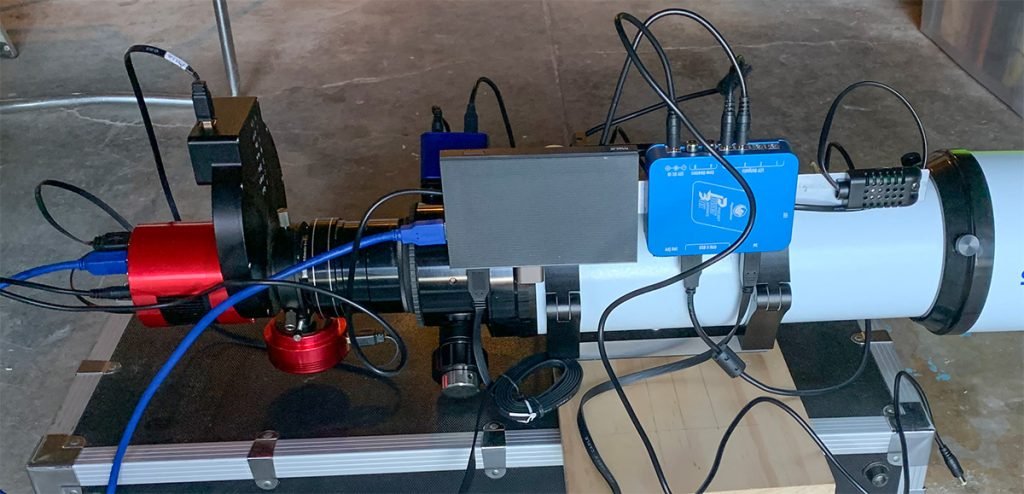
However, this also brings a risk. While USB traditionally supplies 5 Volts, some new components use USB-C to provide higher voltages. This photo is my own rig, and you’ll notice I have a MeLE minicomputer on the refractor. It’s powered through a USB-C cable and needs 12 Volts. This is hugely convenient because there is 12V on the rig for all the other components and I can just pick up power from the Pegasus Powerbox Advanced night to the computer.
But you can see where I’m going with this, can’t you?
The MeLE comes with a power supply that gives me 12V to a USB-C plug. If I have a component like a focuser or filter wheel that has needs 5V from USB-C cable I have to be absolutely sure that I’m using the right power supply and giving the component the right voltage.
So far, we don’t know of anyone who has unwittingly blown up something expensive by giving it the wrong power, but please be careful!